info@qilowatt.lv I +372 5300 4470


Using the smart plug
SmartPlugs, the tools for your home office
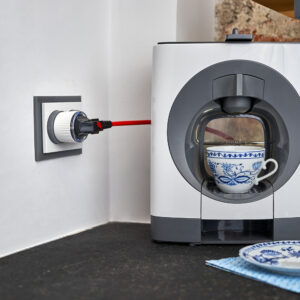
It doesn’t take much to make your home smarter – just start with a smart wall contact or shield-mounted relay that can turn appliances and other devices on or off at any time, wherever you are.
For example, you can turn on the electric radiator at home when you leave work and enjoy the extra warmth when you get home, or turn on the sauna stove when you’re hiking to keep it warm when you get back to your cottage or cottage after a long hike in the bush.
The products offered by Qilowatt It are not only smart, they are also smart enough to monitor the electricity market price and switch on the appliance at favourable times. In the app, you can set timers so that, for example, your floor heater or electric boiler is warmer in the morning and evening than when you are away from home during the day or sleeping at night.
Automation
On the way to work, have you thought about whether I turned off the iron? Or did the electric heater still get switched off on the way from the cottage to the city?
With the smart plug, you can control exactly that and switch off the device if necessary. Appliances can be automatically switched off at a set time or when electricity prices skyrocket.
Electricity consumption
Do you know how much electricity your electric water heater consumes when heating water? This all depends on a number of factors, such as the size of the boiler and the amount of scale on the heating element. In general, domestic boilers consume between 1kW and 4kW, with smaller ones being 1-phase and larger ones using 3-phase to heat water.
It’s important to understand which smart plug is right for your electrical appliance – whether it’s a floor heater, electric boiler or radiator. All of them consume a certain amount of current when in operation, so read the instructions on the packaging or the label on the electrical appliance carefully to check the conditions of use.
Hidden dangers
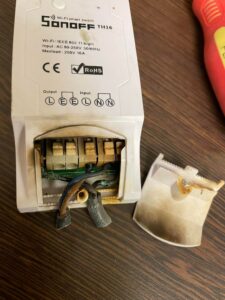
If the smart plug heats up slightly, there is nothing critical about this in itself, but if you feel the plug heating up or the cord warming up, you should stop using it immediately and seek professional help. In the event of overheating, the circuit-breaker or the protection cap on the line may fail to do its job, which is already extremely dangerous. There are more situations than expected where fuses have been replaced by larger ones for exactly as long as they are no longer effective. This creates a situation where all other wiring burns out before the fuse is tripped, but the fuse “stays in”.
In the event of an overload, the plug first heats up, then a meltdown can occur, which can result in a fire.
The wiring of electrical equipment connected to the socket should be appropriate to the maximum load. Wires with a cross section of 1.5 square millimetres can be loaded up to 2400W, wires with a cross section of 2.5 square millimetres can be loaded up to 3800W.
Smart relays generally have either spring-clamp contact connections or screw-connection terminal blocks. However, neither connection should be made with fibre optic cables, but either rigid or sheathed cables should be used. The springs are strong and it is difficult to slide the wire between them to ensure a proper contact connection. The advantage of a spring clamp is that the connection is not afraid of vibrations and it is good and convenient to make connections with them. However, the screw connection cannot withstand vibration and should be retightened after a period of time.